
If you use Gmail, sooner or later you’ll need to sign out. Whether you’re switching to a new device, borrowing a friend’s laptop, using a public computer, or simply tightening up your account security. Depending on the device and the situation, there are several ways to end your session. Here’s everything you need to know, step by step.
Quick answer: how do I sign out of Gmail?
- On a computer, open Gmail, click your profile picture in the top right and select Sign out (or Sign out of all accounts if several are connected).
- On a phone or tablet (Android, iPhone or iPad), the Gmail app has no true “sign out” button. You remove your Google Account from the device instead:
- tap your profile picture
- choose Manage accounts on this device
- then Remove from this device
- Your emails are never deleted; they stay safe on Google’s servers and you can sign back in anytime. If a device is lost or stolen, sign out remotely from your Google Account’s security settings. Everything below covers each of these cases in detail, including how to handle multiple accounts and how to secure your inbox once you’ve logged out.
Sign out of Gmail on your smartphone or tablet
Do you use an Android phone, an iPhone or an iPad? On mobile, the only way to sign out of Gmail is to remove your account from the device. This action ends the session on that device — but it also signs you out of every other Google app on the same device, such as Maps, YouTube, Drive and Calendar. Here’s how to do it:
- Open the Gmail app
- Tap your profile picture in the top right
- Tap “Manage accounts on this device”
- Choose the account you want to remove
- Tap “Remove from this device”
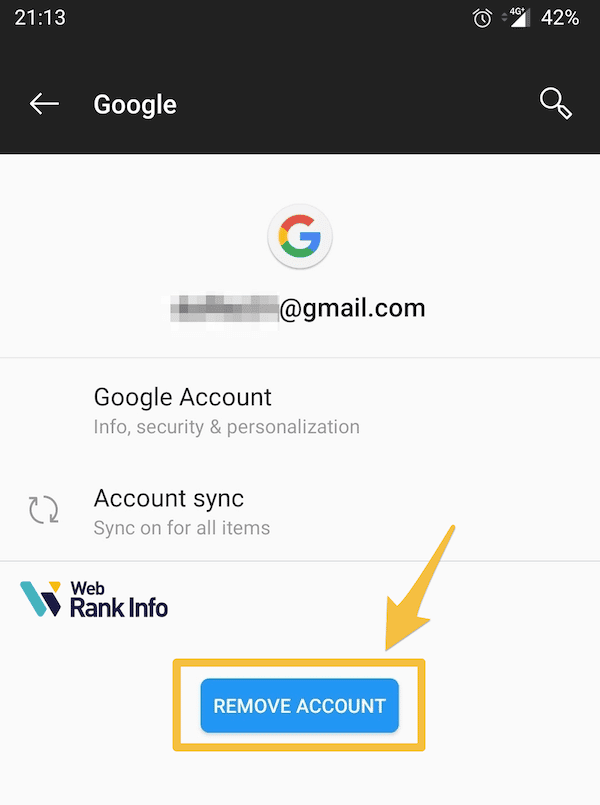
⚠️ Warning: Removing your account from the app does not delete your account. Your emails and data remain intact on Google’s servers, and you can still use Gmail on your other devices. If you actually want to delete your account for good, that’s a completely different (and irreversible) action. see our tutorial on deleting a Gmail account.
See also: how to create a free Gmail account, what to do when Gmail storage is full, and how to delete all emails in the trash.
Sign out vs. delete account on Android: what’s the difference?
On Android, two very different actions are often confused. Understanding the distinction saves you from an irreversible mistake.
Signing out (removing the account from the device) simply ends the session on that particular phone or tablet. You can do it from the Gmail app as shown above, or from Settings > Accounts > Google. Your Google Account keeps existing, your emails, contacts, photos and Drive files are untouched, and you can sign back in at any moment (on the same device or another one). Think of it as closing a door, not demolishing the house.
Deleting your Google Account is a permanent, account-wide action performed in your Google Account settings. It erases your Gmail address, all your emails, your Drive files, your YouTube history and everything else tied to that account, across every device. There is no signing back in afterwards (only a short grace period to change your mind). This is not something you do to log out. It’s what you do when you’re leaving Gmail for good.
💡 Expert tip: If your goal is just to hand the phone to someone or stop notifications, remove the account, never delete it. Deletion should be reserved for the rare case where you truly want the Google Account itself to disappear.
Sign out of your Gmail account on a computer
- Open Gmail
- Click your profile picture in the top right
- Click “Sign out”
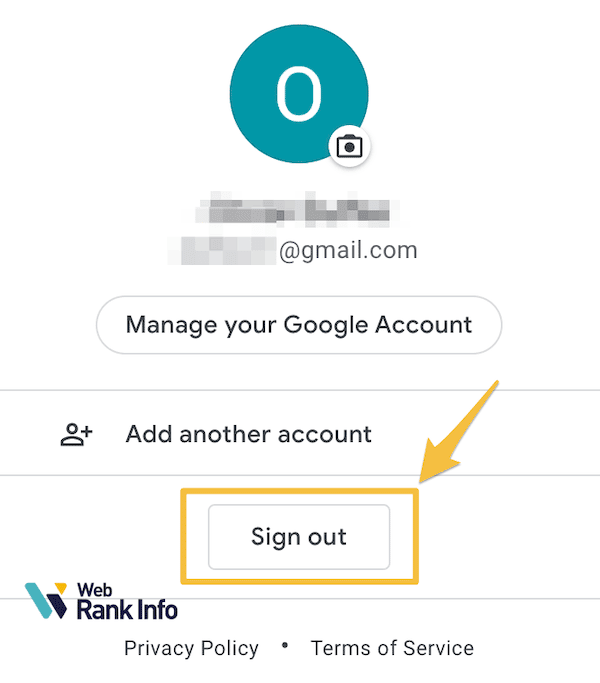
On a computer, signing out ends the session in your browser but leaves your account and data fully intact. If you’re on a shared or public computer, this is the single most important habit for keeping your inbox private.
See also: how to sign in to Gmail.com.
Managing multiple accounts: sign out of one Gmail account but not the others
Many people juggle several Gmail addresses: a personal one, a work one, maybe a side project. Signing out of just one while keeping the others active works differently depending on the device.
On mobile (Android, iPhone, iPad): you can remove a single account and keep the rest. Tap your profile picture, choose Manage accounts on this device, select only the account you want to drop, and remove it. Your other accounts stay signed in and fully usable.
On a computer: here’s the catch that trips people up. When you click Sign out in a browser, Google ends the session for all the Google accounts connected in that browser at once (not just the active one). There’s no reliable per-account sign-out in a single browser window. To keep your accounts truly separate, the cleanest approach is to use a dedicated browser profile for each account, or open one account in a private/guest window while the others stay logged in normally.
💡 Expert tip: If you frequently switch between a personal and a professional inbox, set up a separate Chrome profile for each. Each profile keeps its own session, cookies and bookmarks, so signing out of one never touches the other. There’s no risk of sending an email from the wrong address.
See also: how to send emails from another address in your Gmail account.
Sign out of Gmail remotely on a lost or stolen phone
If you’ve lost your phone, had it stolen, or simply forgot to sign out on a computer you no longer have access to, you can end that session remotely from any other device. This cuts off access to your inbox without needing the lost device in hand.
- On a computer, open Gmail and click your profile picture in the top right
- Click “Manage your Google Account” (or “Edit Google Account”)
- Go to “Security” (or “Security & sign-in”)
- In the “Your devices” panel, click “Manage all devices”
- Select the lost or unknown device, or a specific session on it
- Click “Sign out”
You can also go straight to your device activity page at myaccount.google.com/device-activity. A session there simply means a period during which your account is signed in on a device, via a browser, an app or a service. A single device may show several sessions, so to fully cut off access you should sign out of each of them.
⚠️ Warning: Signing out remotely is a first step, but on its own it isn’t enough if the device was stolen. Anyone who knows your password could sign straight back in. Immediately change your Google password and turn on 2-step verification so the thief can’t regain access. Even with your password in hand.
Sign out vs. delete account vs. guest mode: a quick comparison
These three options are easy to mix up, but they do very different things. Use this table to pick the right one for your situation.
| Sign out / remove from device | Delete the Google Account | Guest / private mode | |
|---|---|---|---|
| What it does | Ends the session on that device | Permanently erases the account and all its data | Lets you browse without saving the session |
| Account still exists? | Yes | No | Yes (you never sign in) |
| Emails & data kept? | Yes, safe on Google’s servers | No, deleted for good | Nothing is stored in the first place |
| Reversible? | Yes: just sign back in | No (only a short grace period) | Yes: just close the window |
| Best for | Switching or securing a device | Leaving Gmail permanently | A quick check on someone else’s computer |
💡 Expert tip: Need to check your email on a friend’s or a public computer? Skip signing in altogether, open a private/incognito window or a guest browser profile. When you close it, no session, cookies or history are left behind, so there’s nothing to sign out of.
What happens when you sign out of Gmail?
Signing out is a safe, reversible action. Here’s exactly what it does — and what it doesn’t:
- Your session ends on that device or browser, and access to your inbox is blocked until someone signs in again.
- Your emails and data are never deleted. Everything stays on Google’s servers and is waiting for you the next time you log in.
- Syncing stops on that device. Your bookmarks, history, passwords and other data are no longer kept in sync with your account until you sign back in.
- On mobile, other Google apps sign out too. Because you removed the whole account, apps like Maps, YouTube and Drive on that device are affected as well.
- Nothing is permanent. Signing back in restores everything exactly as it was.
Why sign out of Gmail? The main advantages
Signing out isn’t just housekeeping: it’s a genuine security habit. The main benefits:
- Protecting a shared or public device: nobody who uses that library, hotel or office computer after you can open your inbox.
- Preventing unauthorized access: an open session is an open door. Closing it removes the easiest way for someone to read, send or delete your emails.
- Safeguarding your privacy: your messages, contacts and personal information stay out of sight.
- Preparing a device you’re selling or giving away: removing your account is an essential step before a phone or laptop changes hands.
- Cutting off a device you no longer control: a lost, stolen or old device can be logged out remotely so it can’t reach your account.
How to secure your Gmail account after signing out
Signing out closes the current session, but real security comes from a few extra habits. Once you’re logged out (especially after using an untrusted device) take a moment to lock things down:
- Change your password if you signed in on a device you don’t fully trust. This instantly invalidates any session you might have missed.
- Turn on 2-step verification so that a password alone is never enough to get into your account.
- Review the devices with account access in your Google Account’s Security section, and sign out any you don’t recognize.
- Check your recovery details: a recovery phone number and email make it far easier to regain control if something goes wrong.
- Prefer your own trusted devices. On a personal phone or computer you use every day, staying signed in with 2-step verification enabled is generally safer than repeatedly logging in on random machines.
📊 Did you know? In a landmark study run by Google with researchers from New York University and UC San Diego, an on-device sign-in prompt (a form of 2-step verification) blocked 100% of automated bot attacks and about 99% of bulk phishing attempts. In other words, turning on 2-step verification is one of the single most effective things you can do to keep your inbox out of the wrong hands.
Good to know: once you’re signed out, your bookmarks, history, passwords and other data are no longer synchronized with your account. You’ll need to sign in again to resume syncing.
See also: how to send emails from another address in your Gmail account and what is the maximum attachment size in Gmail?
Frequently asked questions
How do I sign out of the Gmail app?
In the Gmail app, tap your profile picture at the top right, then “Manage accounts on this device” and remove the account of your choice. On mobile there is no separate “sign out” button. Removing the account is how you log out, and it also signs you out of other Google apps on that device.
Does signing out of Gmail delete my emails?
No. Signing out or removing your account from a device never deletes anything. Your emails, contacts and files stay safe on Google’s servers and are waiting for you the next time you sign in.
How do I sign out of one Gmail account but not the others?
On a phone or tablet you can remove a single account while keeping the rest signed in. On a computer, clicking “Sign out” logs out every Google account in that browser at once, so the best way to keep accounts separate is to use a dedicated browser profile for each one.
How do I sign out of Gmail on a lost or stolen phone?
From another device, open your Google Account, go to Security, then “Manage all devices” (or visit myaccount.google.com/device-activity), select the lost device and sign it out. Then change your password and turn on 2-step verification straight away.
What is the difference between signing out and deleting my Gmail account?
Signing out simply ends the session on a device: your account keeps existing and nothing is lost. Deleting your Google Account is permanent: it erases your emails, Drive files and everything tied to the account across all devices, with no way to sign back in afterwards.
See also: how to use the Bcc option in Gmail.
Back to Gmail power user tips