
Want to know when your email has been received or opened in Gmail? There is no single button that guarantees it, but there are four reliable ways to get close:
- the native Google Workspace feature
- the Mailtrack (now Mailsuite) extension
- the Boomerang extension
- Microsoft Outlook
This guide compares all of them, explains the difference between a read receipt and a delivery receipt, covers the Gmail mobile apps on iPhone and Android, and tells you which option fits your situation, including sending legal documents.
Quick answer: 4 ways to get a read receipt in Gmail
If you only remember one thing: personal @gmail.com accounts have no built in read receipt, so you need either a Google Workspace plan or a browser extension. Here is a side by side view of the main methods.
| Method | Best for | Cost | Works on personal @gmail.com? | Setup time |
|---|---|---|---|---|
| Google Workspace native receipt | Companies emailing inside their own domain | Included in Workspace (from about 6 USD per user per month), admin must enable it | No, Workspace only | Admin: a few minutes |
| Mailtrack / Mailsuite extension | Simple, high volume open tracking | Free with a visible signature, paid from about 12 USD per month to remove it | Yes | About 1 to 2 minutes |
| Boomerang extension | Tracking plus automatic follow up reminders | Free up to 10 credits per month, paid from about 5 to 15 USD per month | Yes (Personal plan is @gmail.com only) | About 2 to 3 minutes |
| Microsoft Outlook | People who read Gmail inside Outlook | Included with Outlook / Microsoft 365 | Yes, if Gmail is connected to Outlook | None extra |
Short version: pick Google Workspace if you send mostly internal emails, Mailtrack for the simplest free open tracking, Boomerang if you also want automatic follow ups, and Outlook if that is already your daily email client. Details for each method are below.
Read receipt vs delivery receipt: what is the difference?
These two terms are often confused, so it is worth being precise before choosing a tool.
- Delivery receipt: confirms that your message reached the recipient mail server or inbox. It says nothing about whether a human looked at it. A message can be delivered and never opened.
- Read receipt: confirms that the message was opened. It is closer to what most people want, but it is not proof that the content was actually read or understood.
- Open tracking (tracking pixel): the technique used by extensions like Mailtrack and Boomerang. A tiny invisible image is added to the email. When the recipient loads images, the open is recorded. This is an approximation of a read receipt, not an official acknowledgement.
Gmail natively offers a read receipt (in Google Workspace only), but no true delivery receipt. Outlook, by contrast, offers both a delivery receipt and a read receipt as two separate checkboxes. Keep this distinction in mind, especially for sensitive or legal emails covered later in this article.
Method 1: Use Google Workspace’s native read receipt feature
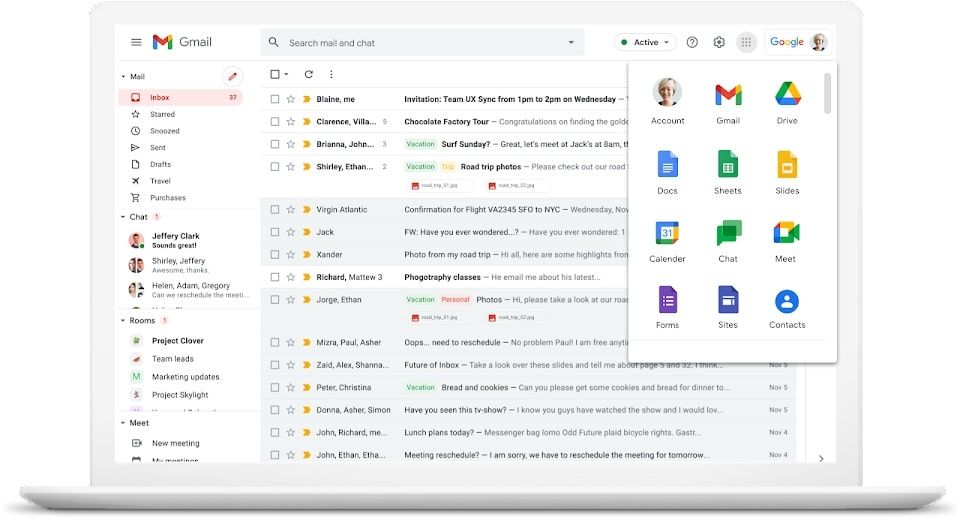
This feature is only available if you use Gmail with a Google Workspace plan. If your email address ends with @gmail.com, this solution does not work and you should jump to Method 2 or Method 3. On top of that, an administrator has to enable read receipts in the Google Admin console before anyone in the organization can use them.
How does it work? You send your email with a read receipt request. When the recipient opens the message, an acknowledgement can be sent back to you as an email, showing the date and time. The receipt is most reliable when both sender and recipient are on the same Workspace domain.
For admins: enable read receipts in Google Workspace
- Sign in to the Google Admin console with an administrator account
- Go to Apps, then Google Workspace, then Gmail, then User settings
- Find the Email read receipts section
- Choose whether to allow receipts for everyone, only inside the organization, or only for specific approved external addresses, then save
To request a Gmail read receipt in Workspace:
- On your computer, open Gmail (this only works in the web version, not the mobile app)
- Click on Compose
- Write your email as you normally would
- At the bottom right, click on More options, then Request read receipt
- Send your message
Note: each acknowledgement appears in your inbox. The recipient may need to approve the receipt before you are notified. There is no need to add this person to your Gmail contacts. Read receipts also do not work for email aliases or group mailing lists, only for individual addresses.
To send (return) a Gmail read receipt in Google Workspace:
- To send the receipt now, click Send receipts
- To send it later, click Not now. You will be prompted again the next time you open the message
- If someone requested a receipt but you never see a prompt, it usually means the receipt was returned automatically by your mail client
Warning: no guarantee of reading
Getting an acknowledgement does not always mean the recipient actually read your message. How a receipt behaves depends on the email system the recipient uses. Google itself recommends not relying on read receipts to verify delivery.
For example, you can get a read receipt if someone using an IMAP based client marks your message as read without truly opening it, and some non IMAP mobile systems may not return anything at all. See also: How do I access my Gmail inbox?
Method 2: Track opens with Mailtrack (now Mailsuite)
Mailtrack rebranded to Mailsuite in early 2024, but the tool is the same and many people still search for it as Mailtrack. It works with a personal @gmail.com account, so you do not need Google Workspace or admin access.
How Mailtrack works and its business model
Mailtrack adds a tracking pixel to your outgoing emails and shows WhatsApp style checkmarks in your sent folder: one check for delivered, two checks for opened. The business model is freemium. The free plan allows unlimited open tracking but adds a visible Sent with Mailsuite signature to every message, which tells the recipient you are tracking them and can look unprofessional in client emails. Paid plans (around 12 USD per user per month, less on annual billing) remove that signature and add link tracking, an invisible tracker, and daily reports.
Install Mailtrack (about 1 to 2 minutes)
- In Chrome, install the Mailtrack add-on available here (or from mailtrack.email)
- Confirm the installation uses the correct Google account and accept the permissions
- Choose the free plan
- In Gmail, the Mailtrack icon now appears to the right of the settings icon
Request a receipt in Gmail with Mailtrack
- Click New message, write your email, and optionally remove the tracking signature if you are on a paid plan
- Before sending, check the Mailtrack icon just to the right of the Send button
- Make sure Track this email and Notify me are enabled
- Send your email
Mailtrack adds labels to your sent messages to show whether an email has been delivered and opened, with a timestamp. See also: how to attach a zip file in Gmail.
Method 3: Get read receipts with Boomerang for Gmail
How Boomerang works and its business model
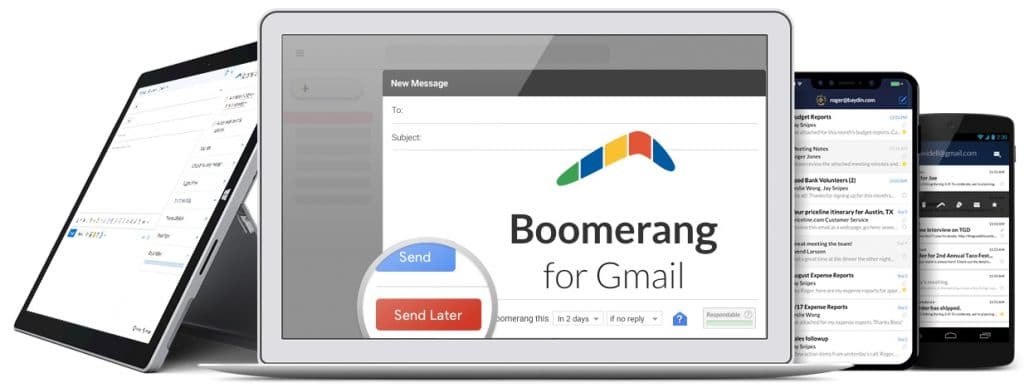
Boomerang is a broader email productivity extension made by Baydin. Beyond read receipts and click tracking, it adds email scheduling, follow up reminders, Inbox Pause, and an AI writing assistant. Its business model is also freemium, but built on message credits: the free Basic plan gives only 10 credits per month, and every scheduled send, tracked message, or receipt uses one credit, so free users often run out within days. The Personal plan (around 5 USD per month) is restricted to @gmail.com addresses, which means Google Workspace users need the Pro plan (around 15 USD per month) to get unlimited use. Boomerang is currently English only.
Install Boomerang (about 2 to 3 minutes)
- In Chrome, install the Boomerang for Gmail extension available here
- Click Sign in with Google
- Confirm the correct Google account and accept the permissions
Use Boomerang read receipts and automatic follow ups
In the compose window, click the blue envelope button labelled Request read receipt and track clicks. You will be notified when the message is opened or when an embedded link is clicked. Boomerang also offers a genuinely useful follow up feature: check Remind me if and set a number of days, and Boomerang will bring the thread back to your inbox if the message has not been opened or answered. Your own opens and clicks are not counted. See also: how to free up space in Gmail.
Method 4: Request receipts through Microsoft Outlook
If you read your Gmail messages inside Microsoft Outlook on a computer, you can use Outlook’s own receipts, which cover both delivery and reading. Here are the steps:
- Start writing the email you want to send
- Go to the Options menu of the message window (not the options of the whole program)
- Find the Tracking or Follow up block
- Check Request a delivery receipt and Request a read receipt, then send
Full read and delivery receipt support in Outlook generally requires a Microsoft 365 or Exchange account. As with Gmail, the recipient can still decline to return a read receipt. See also: how to change your Gmail password.
Gmail read receipt vs Outlook read receipt: key differences
People often ask which is better between Gmail and Outlook for receipts. They work in a similar way (both ask the recipient to confirm), but there are real differences.
| Criteria | Gmail (Google Workspace) | Outlook (Microsoft 365 / Exchange) |
|---|---|---|
| Delivery receipt | Not available natively | Available |
| Read receipt | Available, admin must enable it | Available |
| Personal free accounts | No receipt on @gmail.com | Limited on basic Outlook.com |
| Mobile app support | No, web only | Yes, on recent iOS and Android versions |
| Recipient can decline | Yes | Yes |
Bottom line: Outlook is more complete because it separates delivery from reading and works on mobile, while Gmail’s native option is simpler but limited to Workspace and the web. In both cases the recipient keeps the final say.
Read receipts in the Gmail mobile app (iPhone and Android)
This is a common source of confusion, so let us be clear: the native read receipt request does not appear in the Gmail mobile app, on iPhone or on Android. Even with a Google Workspace account, you can only request a receipt from the Gmail web client on a computer.
What does work on mobile
- Pixel based tools: because Mailtrack (Mailsuite) and similar trackers rely on a tracking pixel already inside the message, they can record opens on any device. Mailtrack in particular supports the Gmail app on Android and iOS, so you can send tracked emails from your phone and receive open notifications.
- Boomerang mobile app: Boomerang offers its own iOS and Android apps, but they are unlocked on paid plans, not on the free Basic tier.
- Prepare on desktop, send from anywhere: another practical approach is to enable tracking on your computer so it applies automatically, then simply send from your phone.
So if getting receipts on your phone matters, a pixel based extension is the realistic option, not the native Gmail feature. See also: where are the archived messages in Gmail?
Mailtrack vs Boomerang for Gmail: head-to-head comparison
These are the two most popular extensions, but they solve slightly different problems. Mailtrack is a focused open tracker. Boomerang is a full email productivity suite that includes tracking.
| Criteria | Mailtrack (Mailsuite) | Boomerang |
|---|---|---|
| Main focus | Open and click tracking | Scheduling, follow ups, tracking, Inbox Pause |
| Free plan | Unlimited tracking, but adds a visible signature | 10 message credits per month, no signature |
| Entry paid price | About 12 USD per month (annual cheaper) | About 5 USD (Gmail only) or 15 USD (Workspace) |
| Read receipts | Yes | Yes |
| Automatic follow up if no reply | No | Yes, a standout feature |
| Mobile apps | Works with the Gmail app on iOS and Android | Own apps, paid plans only |
| Languages | Multiple | English only |
| Setup time | About 1 to 2 minutes | About 2 to 3 minutes |
Our take: choose Mailtrack if you just want to know whether emails are opened and you are happy with a visible signature on the free plan. Choose Boomerang if the real value for you is chasing replies, since its automatic follow up reminders are hard to replicate elsewhere. If you only need to schedule emails, note that Gmail now does that natively for free, which reduces Boomerang’s appeal for light users.
Free email tracking tools for Gmail
If budget is your priority, several extensions offer a usable free tier. Each has a catch, so here is a quick honest overview.
- Mailtrack (Mailsuite): unlimited free open tracking, but every email carries a visible Sent with Mailsuite signature.
- Hunter MailTracker: a clean, minimal tracker with no signature on outgoing emails, free for a limited number of tracked emails per month.
- Streak: a Gmail CRM whose free tier includes email tracking with no watermark, useful if you also want light pipeline features.
- Boomerang: free but capped at 10 credits per month, which is quickly exhausted.
One important caveat for all pixel based free tools: tracking pixels can slightly increase the risk of triggering spam filters, so they are best kept for relationship and follow up emails rather than large cold campaigns.
Can you get a read receipt in Gmail without the recipient knowing?
Yes, in practice, and this is exactly why pixel based tools exist. The native Google Workspace receipt is transparent: the recipient sees a prompt asking whether to confirm. By contrast, a tracking pixel records the open silently in the background, with nothing visible to the recipient, provided you use a plan without a visible signature (the paid tiers of Mailtrack, or trackers like Hunter MailTracker and Streak that never add a watermark).
Two limits are worth knowing. First, some email clients block remote images by default, so the pixel may not load and no open is recorded. Second, Apple Mail Privacy Protection can both hide the real open and generate false opens, which makes silent tracking less reliable than it used to be. There is also an ethical and legal dimension: silently tracking people may conflict with privacy expectations and, depending on your country and context, with data protection rules such as the GDPR, so use it responsibly.
Can you force a read receipt in Gmail?
No, you cannot truly force a read receipt in Gmail. By design, the recipient can always decline the native request, and some organizations even configure automatic denial. The closest thing to forcing confirmation is a tracking pixel that records the open without asking, but even that fails when images are blocked, so it is not a guarantee either.
If you absolutely need certainty that a message was received, the most dependable methods do not rely on receipts at all: ask the recipient to reply and confirm, or use a service designed to prove delivery (see the legal document section below).
How to get a read receipt for a legal document in Gmail
For legal or contractual matters, be careful: a Gmail read receipt or a tracking pixel is not solid legal proof. Receipts can be declined, pixels can be blocked, and neither reliably establishes who opened the message or that they read the contents. If you are sending something with legal weight, prefer one of these approaches:
- Ask for a written reply: a short email back confirming receipt is often the simplest usable evidence, and it removes any ambiguity about who acknowledged the message.
- Use a certified or registered electronic mail service: dedicated providers issue a legally recognized proof of sending and delivery. In France, this is the lettre recommandée electronique, and in the EU the qualified registered delivery services defined by the eIDAS regulation.
- Use an e-signature platform: for documents that need to be signed, these tools log an audit trail showing when the document was viewed and signed.
- Keep your own records: save the sent email, any receipt, and the reply, so you have a consistent trail if it is ever questioned.
In short, use Gmail receipts for everyday follow up, but reach for a certified delivery service when the proof really has to hold up.
How reliable are Gmail read receipts? Our estimates
No tool can promise 100 percent accuracy, because every method depends on the recipient’s behaviour or their email client. Based on how each method works, here is a rough, directional reliability estimate. Treat these as indicative, not measured guarantees.
| Method | Typical setup time | Estimated reliability | Main weakness |
|---|---|---|---|
| Workspace native, same domain | Admin: a few minutes | Moderate to high (around 70 to 85%) | Recipient can decline |
| Workspace native, external recipient | Same | Low to moderate (around 40 to 60%) | Other mail systems may ignore the request |
| Pixel tracking, images auto load | About 1 to 3 minutes | High (around 85 to 90%) | Image blocking and privacy features |
| Pixel tracking, Apple Mail Privacy Protection | Same | Unreliable, both false positives and misses | Opens are masked or faked |
The practical lesson: the more control the recipient has (native receipts they can decline, images they can block), the lower your reliability. For high stakes messages, combine a receipt with a direct request for a reply.
No affiliation: our recommendations are independent
For full transparency: we have no affiliation, partnership, or commercial relationship with Mailtrack (Mailsuite), Boomerang, or any other tool mentioned here. The links are provided for convenience only, we earn nothing if you install these extensions, and the recommendations reflect our independent assessment of how each option works.
Other questions
How do I send a Gmail email with a receipt?
You either need a Google Workspace plan (with read receipts enabled by your admin), or a Gmail extension such as Mailtrack or Boomerang. Personal @gmail.com accounts have no native receipt. See details in the article.
How do I know if a message has been read on Gmail?
By default this is not possible on a personal account. You can enable a read receipt request in Google Workspace, or use a tracking extension like Mailtrack or Boomerang that records opens with a tracking pixel. See details in the article.
Can I get a Gmail read receipt on iPhone or Android?
Not with the native feature, which only works in the Gmail web client on a computer. A pixel based tool like Mailtrack does work in the Gmail mobile apps on iOS and Android.
What is the difference between a read receipt and a delivery receipt?
A delivery receipt confirms the message reached the recipient inbox, while a read receipt confirms it was opened. Gmail natively offers only a read receipt (Workspace only), whereas Outlook offers both.
Can I force a read receipt in Gmail?
No. The recipient can always decline a native receipt, and tracking pixels fail when images are blocked. For real certainty, ask for a reply or use a certified delivery service.
Mailtrack or Boomerang, which one should I choose?
Choose Mailtrack for simple, unlimited free open tracking. Choose Boomerang if you also want automatic follow up reminders when someone does not reply. See the comparison table in the article.
See also: how to use a signature in Gmail
Back to Gmail email address tips